
Rice Husk as Natural Insulation: T3 Architects Featured in Écologie 360 Magazine
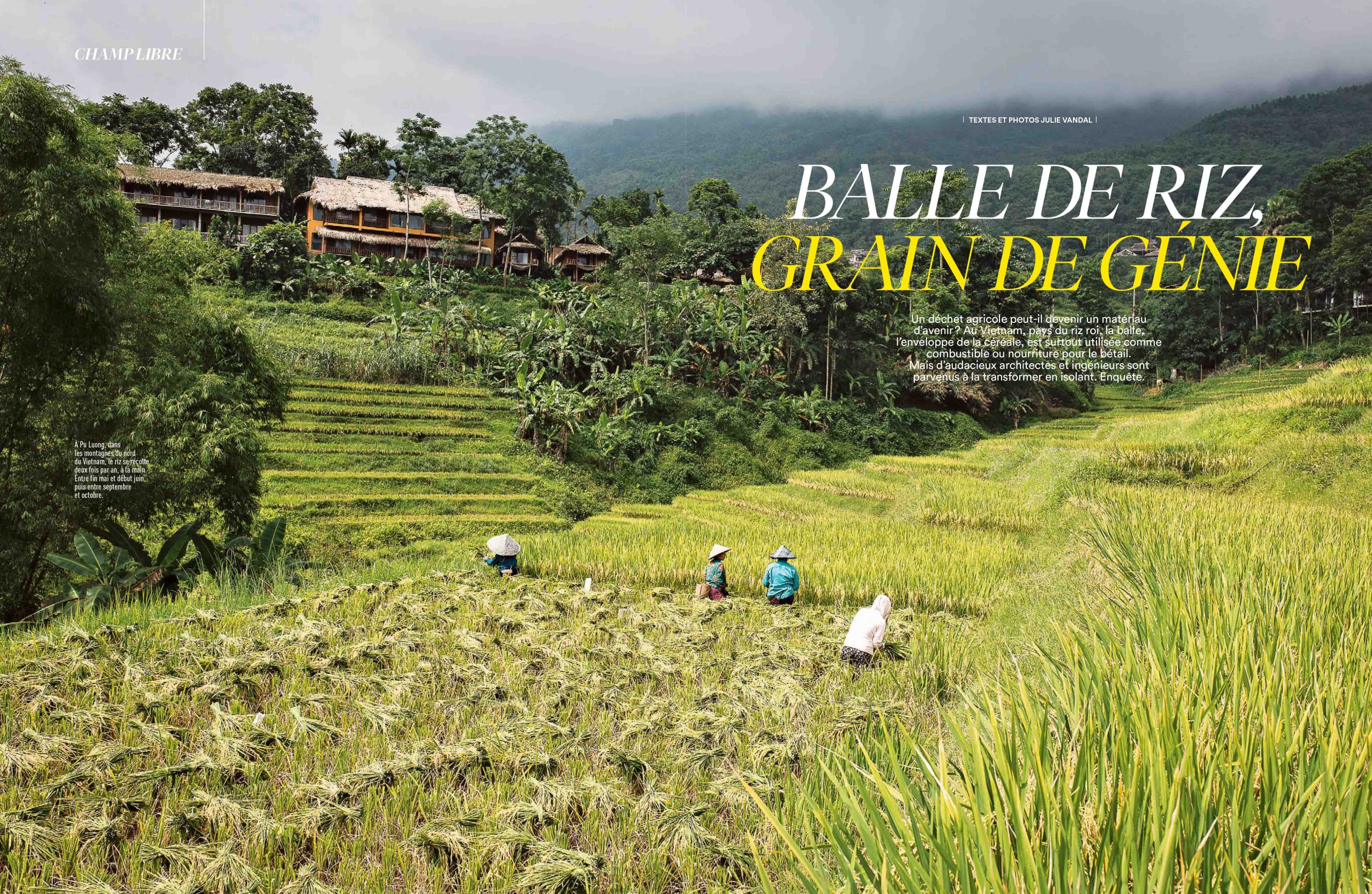
We are pleased to see T3 Architects featured in the latest edition of Écologie 360, in the article “Balle de riz, grain de génie” by Julie Vandal, exploring the potential of rice husk as a natural insulation material and its emerging applications in construction in Vietnam and France.
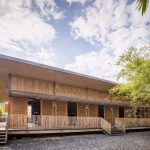
The article highlights T3 Architects’ ongoing research and experimentation with rice husk as a natural insulation material in Vietnam. Our exploration of this locally available agricultural by-product started around 2018, and since then, we have progressively developed and applied the technique across several built projects, from houses and bungalows to a dojo and dormitories for an eco-farm.
From agricultural by-product to building material
As one of the world’s largest rice-producing countries, Vietnam generates several million tonnes of rice husk every year. The husk represents approximately 20% of the weight of harvested paddy rice and is traditionally reused as fuel, animal feed or bedding.
But this abundant agricultural by-product also has interesting properties for construction, particularly as a natural insulation material.
Its high silica content makes rice husk relatively resistant to decomposition, including in humid conditions. It can be incorporated into floors or roofs and requires very limited processing. The article notes that no chemical treatment is required, apart from the addition of a small amount of diatomaceous earth to help protect against insects.
For T3 Architects, the interest in rice husk goes beyond the material itself. It reflects a broader question that guides many of our projects: how can architecture make better use of the resources that already exist within its local context?
Experimenting through built projects
Rather than approaching rice husk only as a theoretical alternative, T3 Architects has developed its use progressively through built projects and collaboration with local suppliers and construction partners.
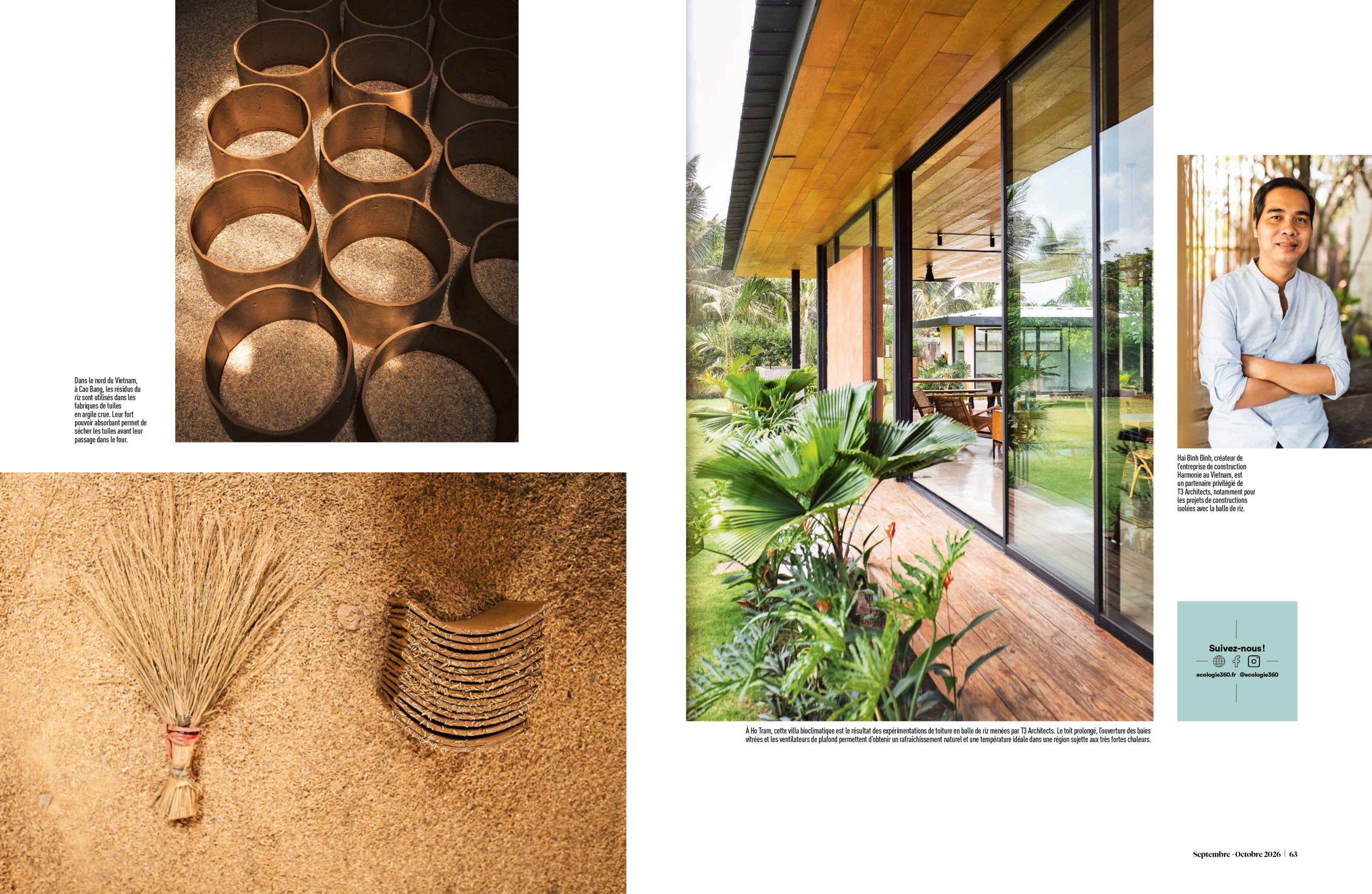
At Ho Tram Villa, rice husk was integrated into the roof insulation as part of a wider bioclimatic strategy. Deep roof overhangs, large openings and ceiling fans work together to encourage natural ventilation and improve thermal comfort in the hot tropical climate. Écologie 360 presents the villa as the result of T3 Architects’ experimentation with rice-husk roof insulation.
The research has since been applied to other projects, including houses, a dojo and dormitories for a farm-based hospitality project, allowing the technique to be tested through different building types and conditions.
Building with what is locally available
For us, sustainable architecture is not only about adding new technologies to buildings. It is also about understanding the climate, available resources and local construction knowledge, and using them intelligently from the beginning of the design process.
Rice husk is a good example of this philosophy: an abundant agricultural by-product that can become a useful building resource through relatively simple construction techniques.
Its use also opens a wider discussion around circularity in architecture — finding new value in locally available materials and reducing dependence on highly processed or imported construction products.
We are very happy to see this ongoing research highlighted by Écologie 360, alongside the local suppliers and construction partners who have helped turn these experiments into built architecture. The article also features Pham Văn Dũng, who supplies T3 Architects with rice husk from his mill in the Mekong Delta, and Hai Bình Đinh of Harmonie, a construction partner involved in T3 projects using rice husk insulation.
#T3Architects #Écologie 360 Magazine #BioclimaticArchitecture #RiceHusk #BioBasedMaterials #CircularEconomy #LocalMaterials #Vietnam